Amigo Card
2022 · (Attempted) Co-Founder
Context
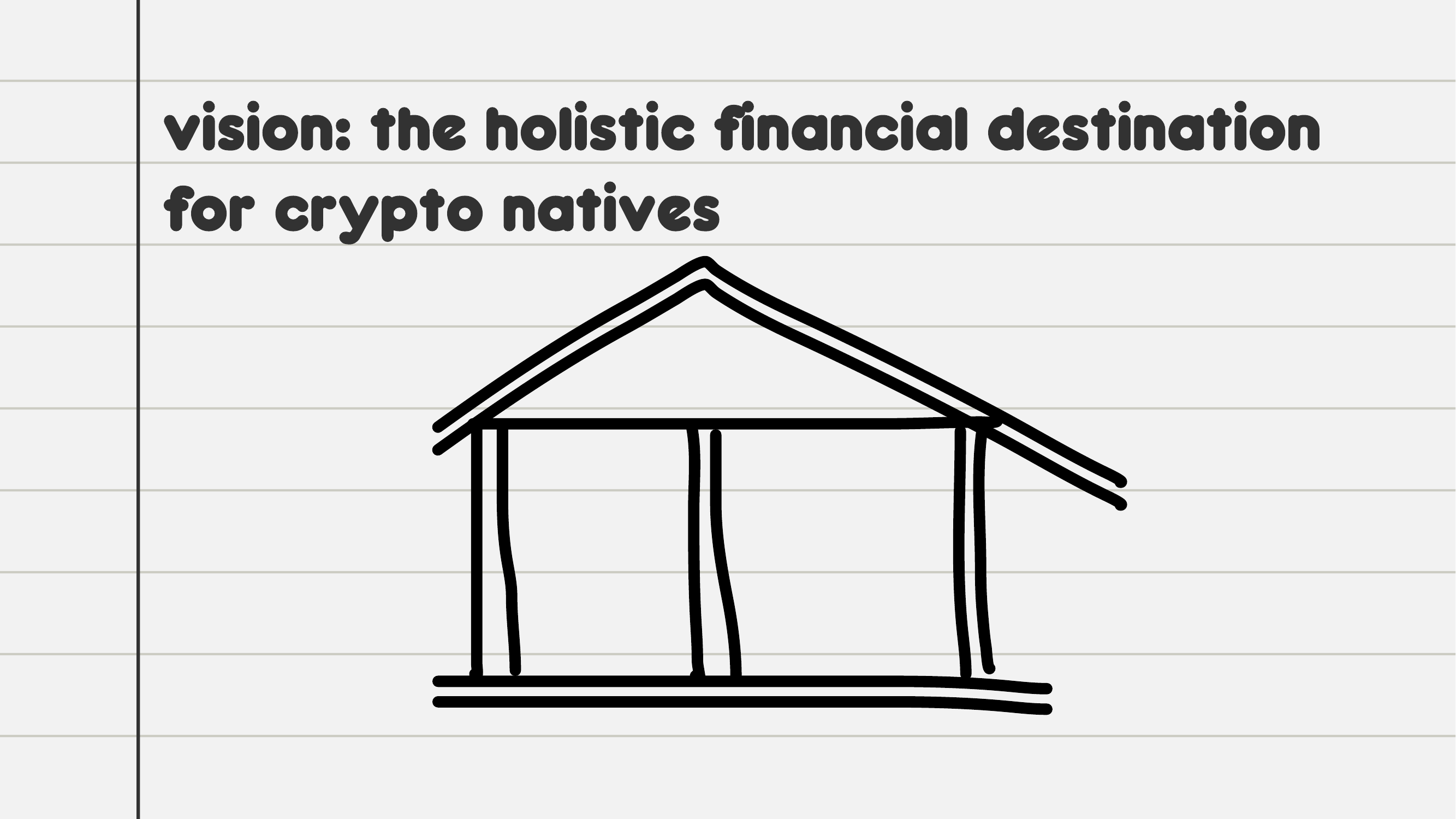
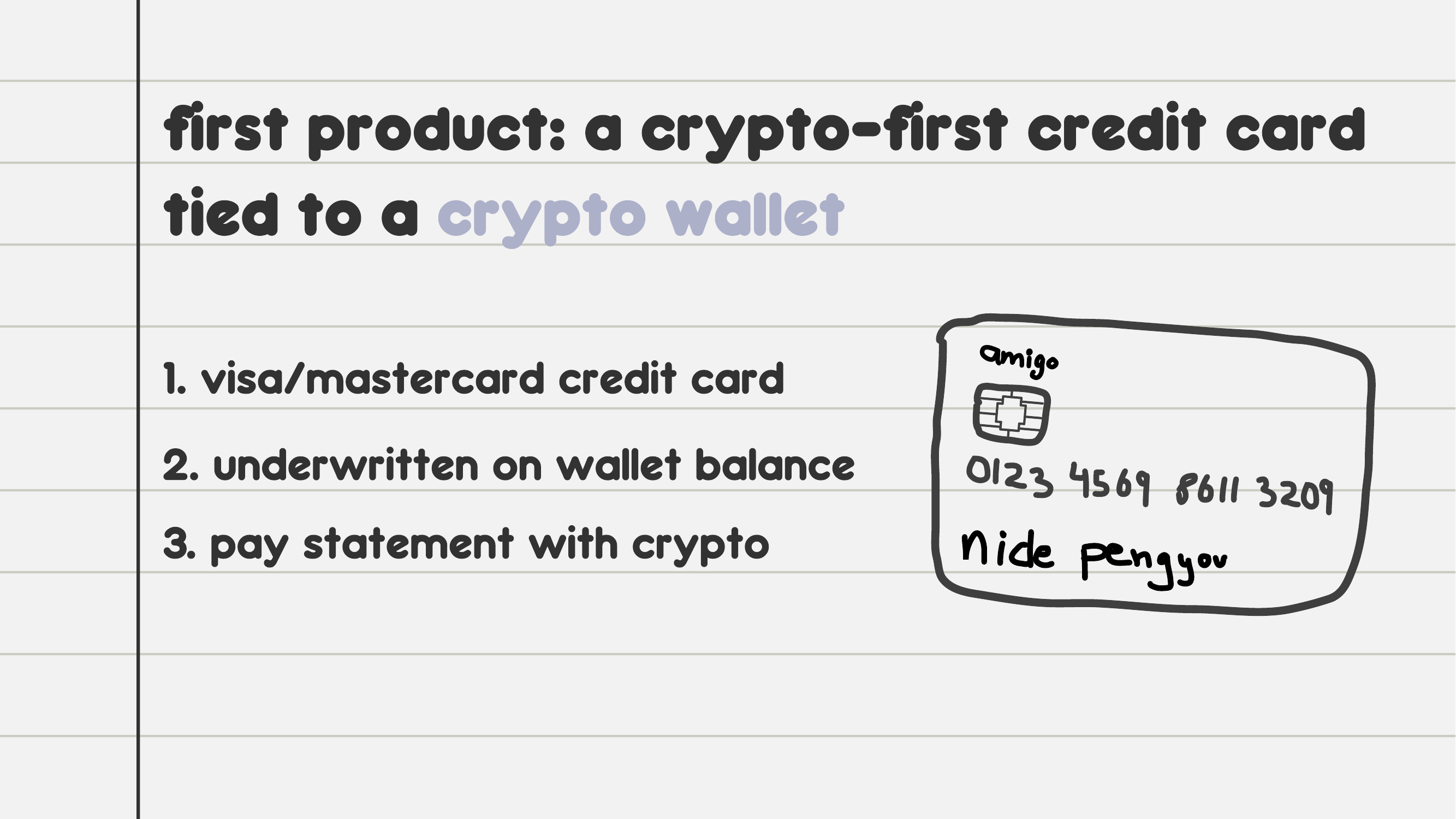
Amigo was a crypto-native credit card I attempted to co-found with Hugh, a friend and tech lead from Google. We wanted to build the holistic financial destination for crypto natives, starting with a Visa/Mastercard credit card underwritten on crypto wallet balances instead of traditional credit scores.
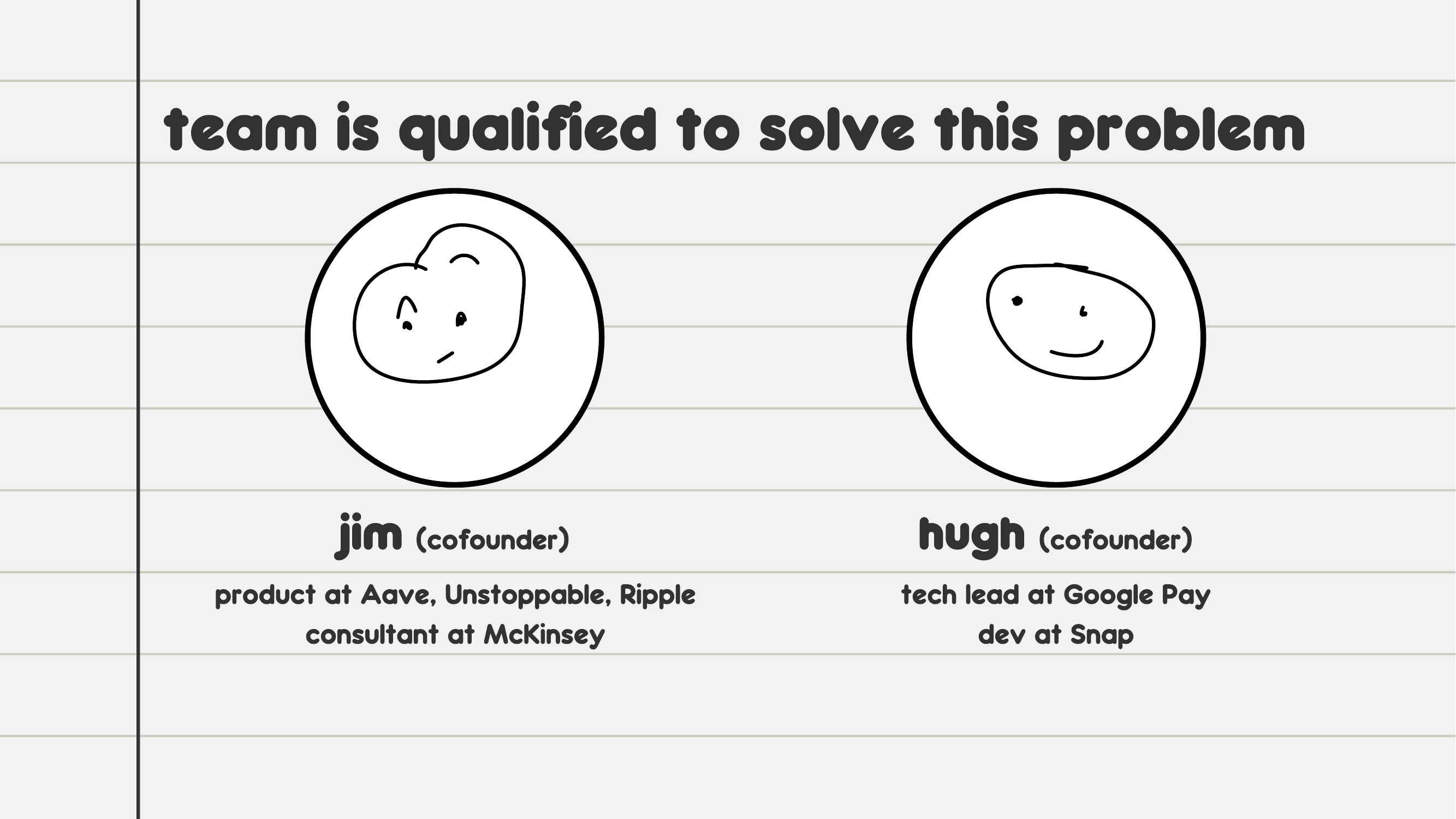
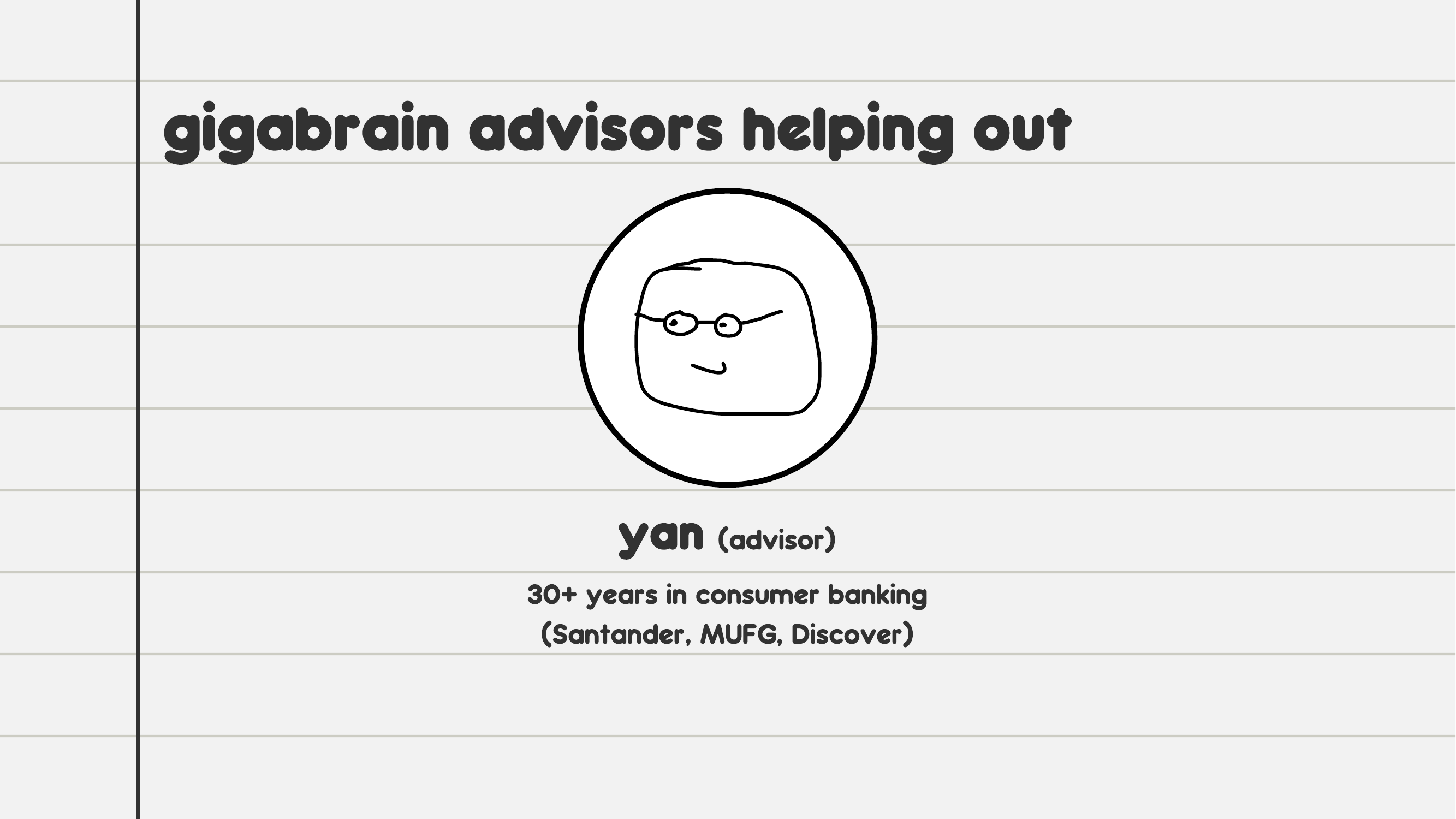
This was early 2022, before any crypto credit card existed (products like Raincards came later). I led product, positioning, GTM strategy, competitive analysis, and the pitch deck, and Hugh led the technical architecture. We also had Yan, a consumer banking veteran with 30+ years at Santander, MUFG, and Discover, advising us on underwriting and compliance.
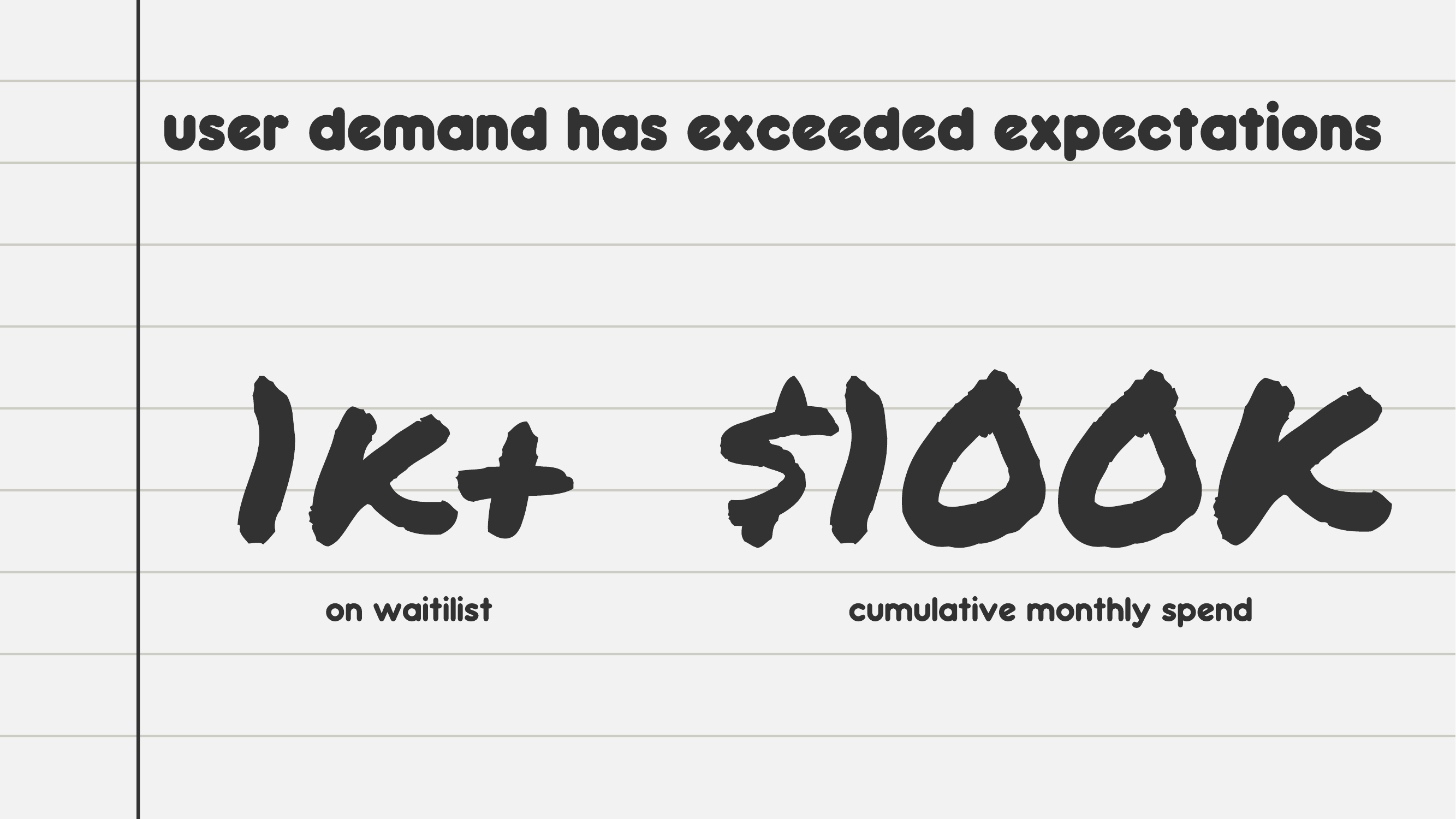
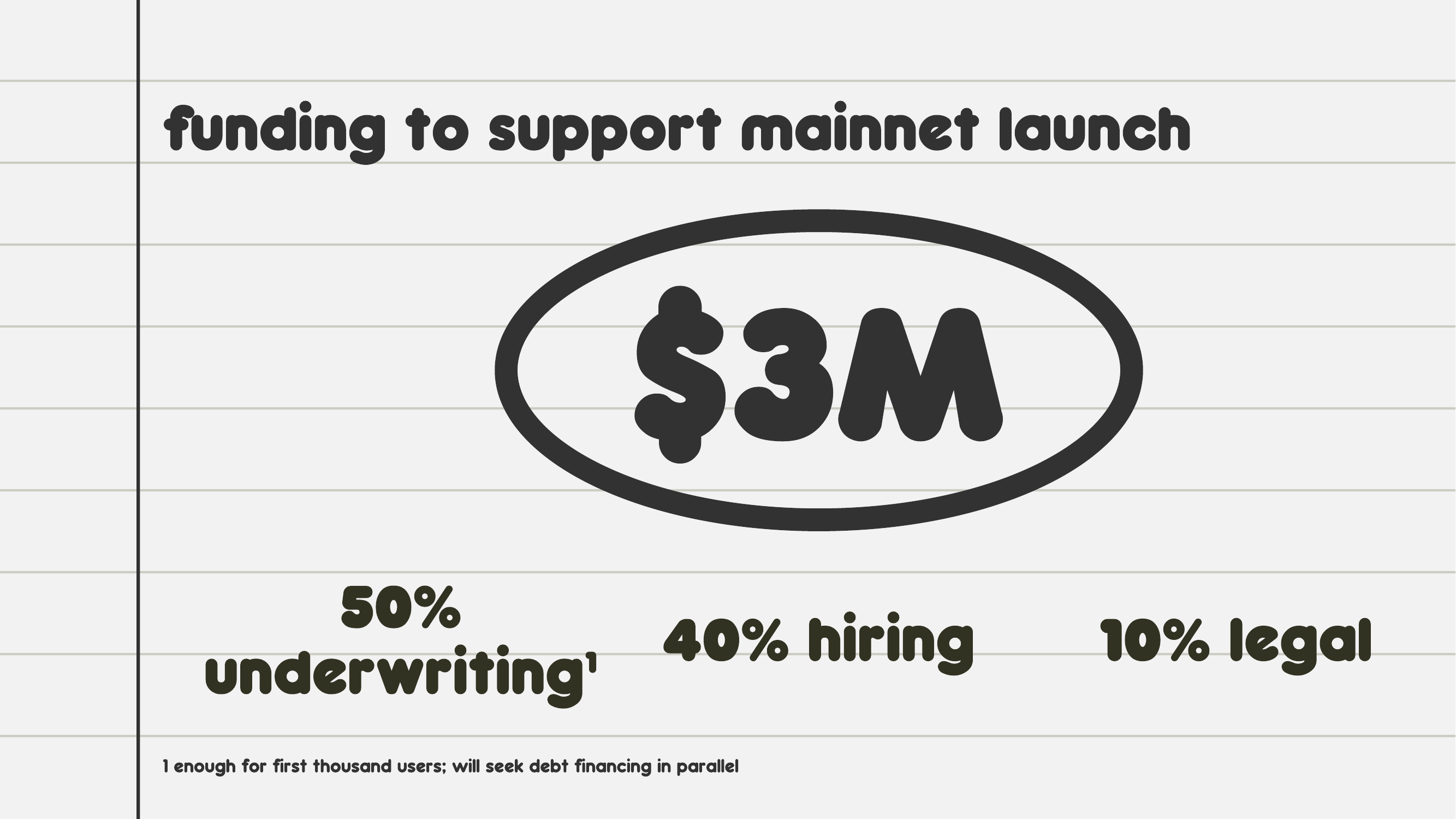
We built a proof of concept, got 300+ users on the waitlist with $600K in cumulative monthly spend, and were raising a $3M seed round. We ultimately decided not to pursue it because neither of us felt personally passionate enough about the problem to commit to a multi-year build.


Problem
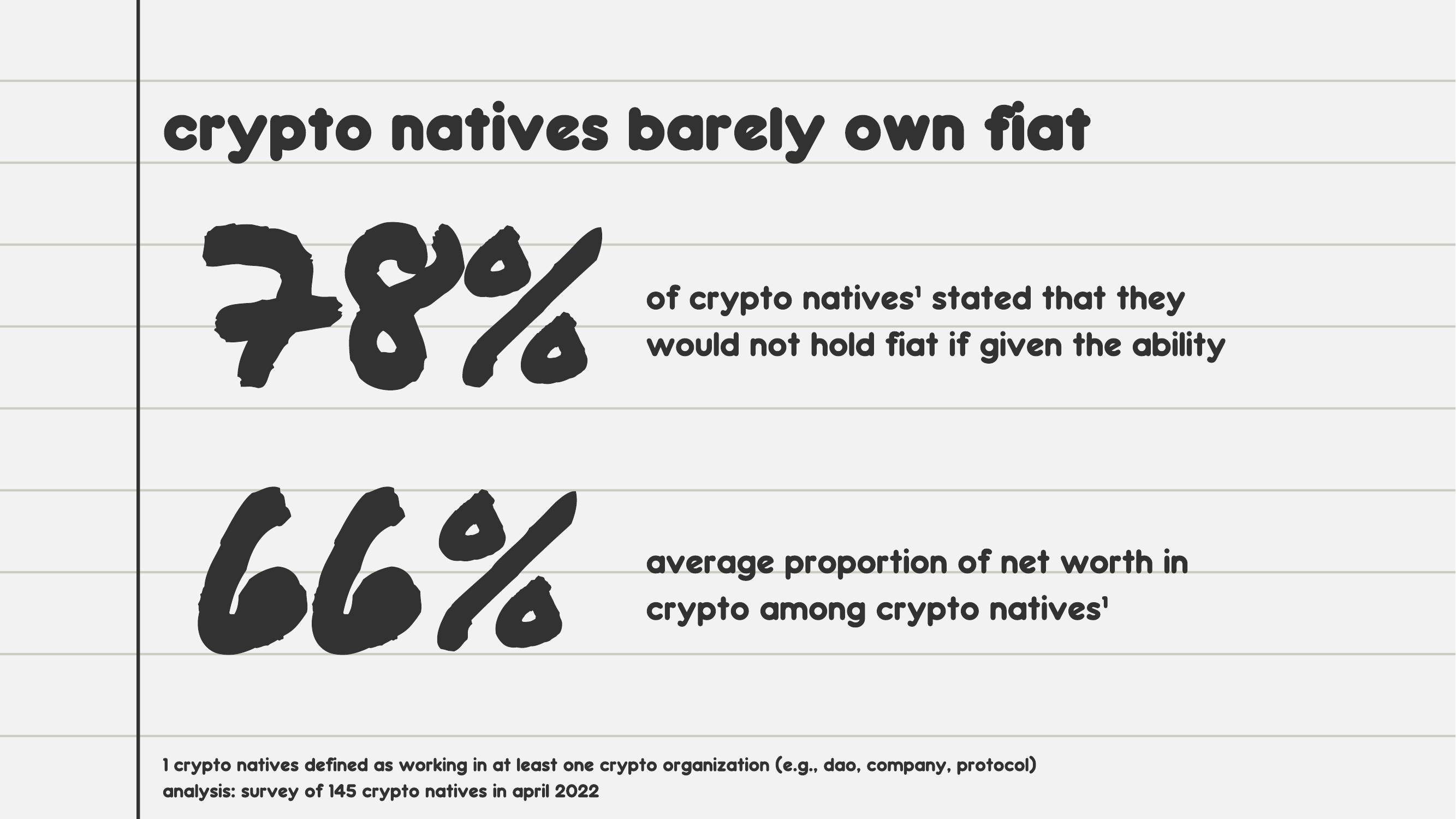
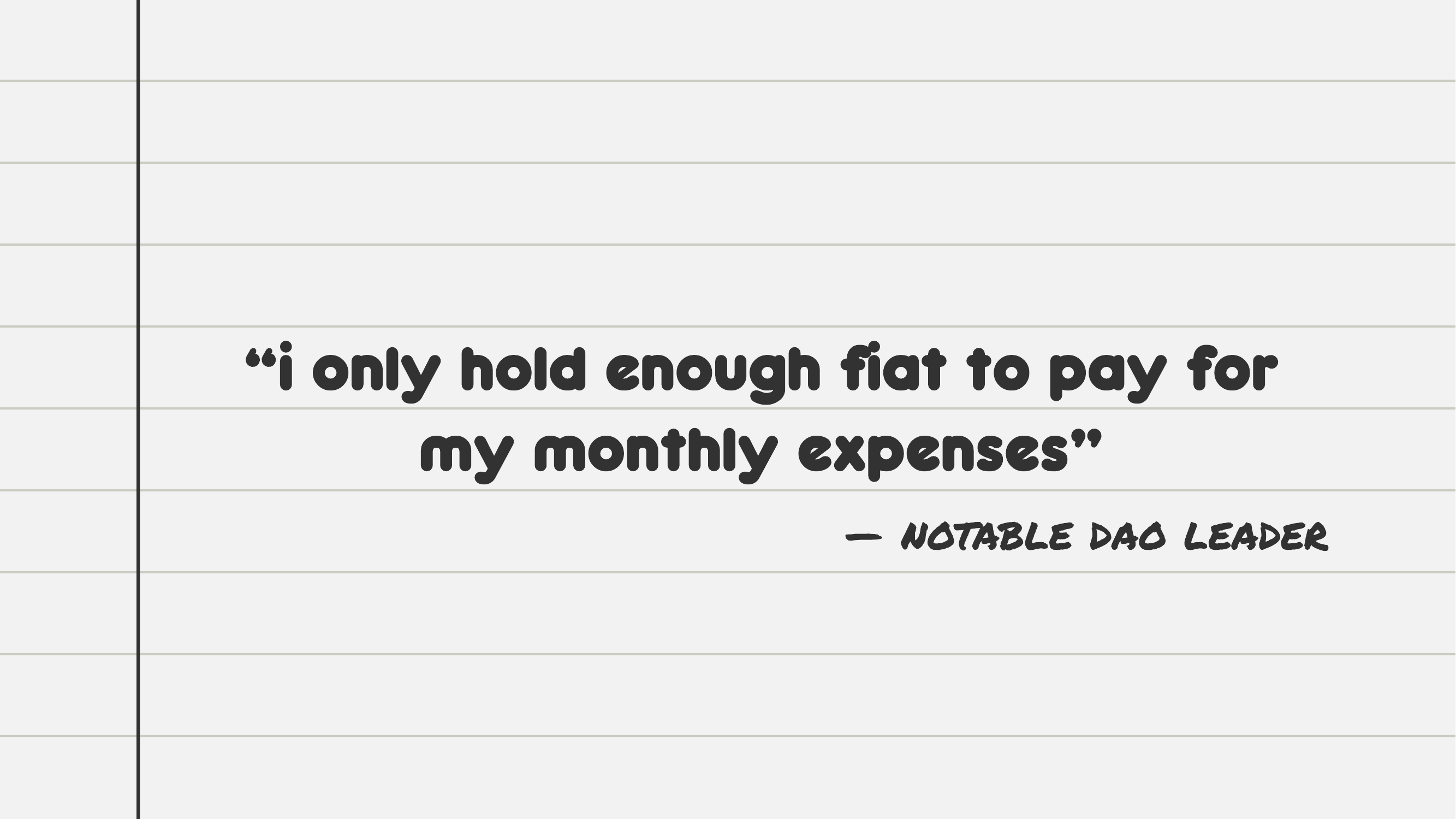
Crypto natives barely own fiat. A survey we ran of 145 people working in crypto organisations showed that 78% would not hold fiat if given the ability, and that 66% of their net worth was already in crypto.
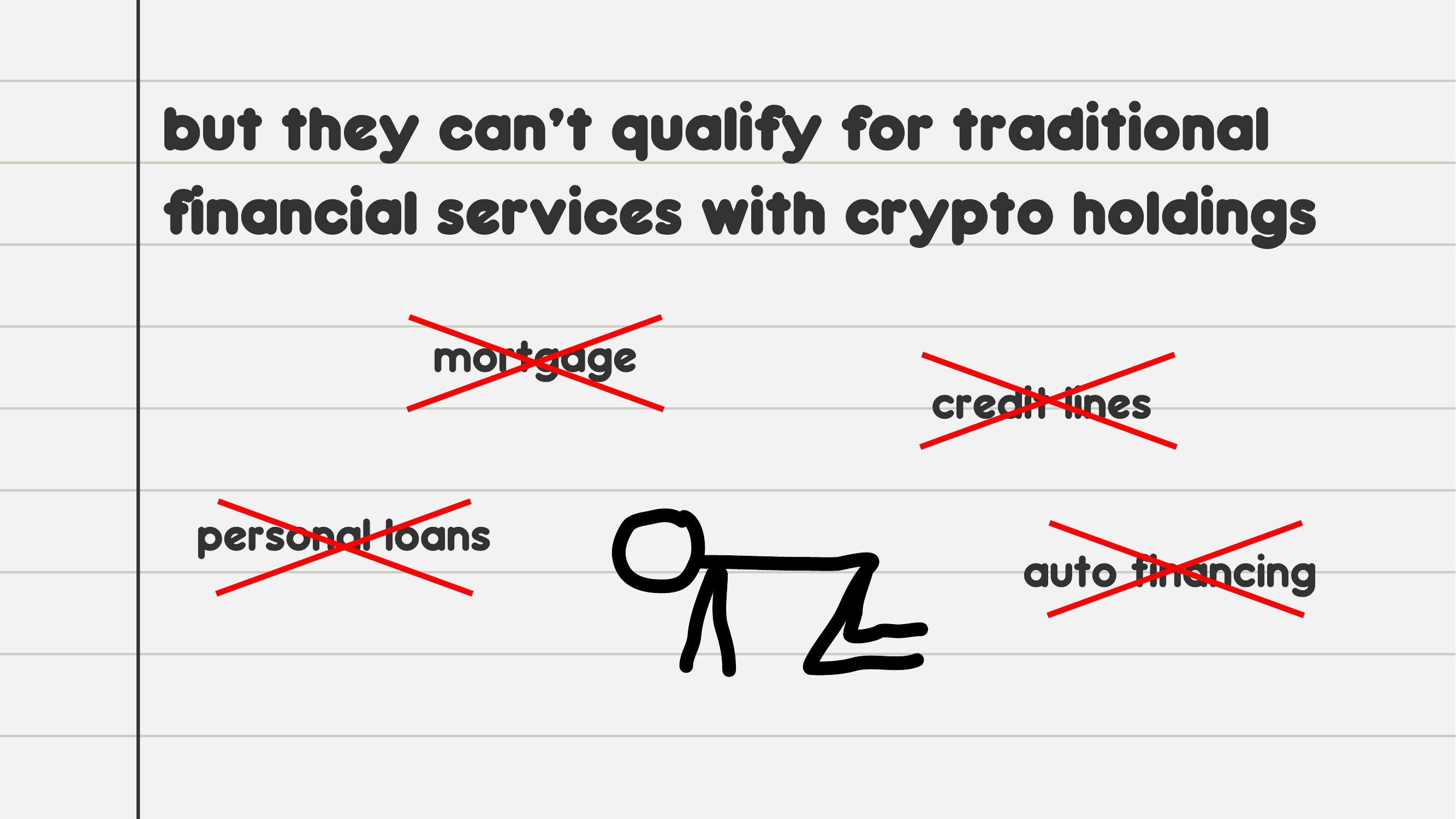
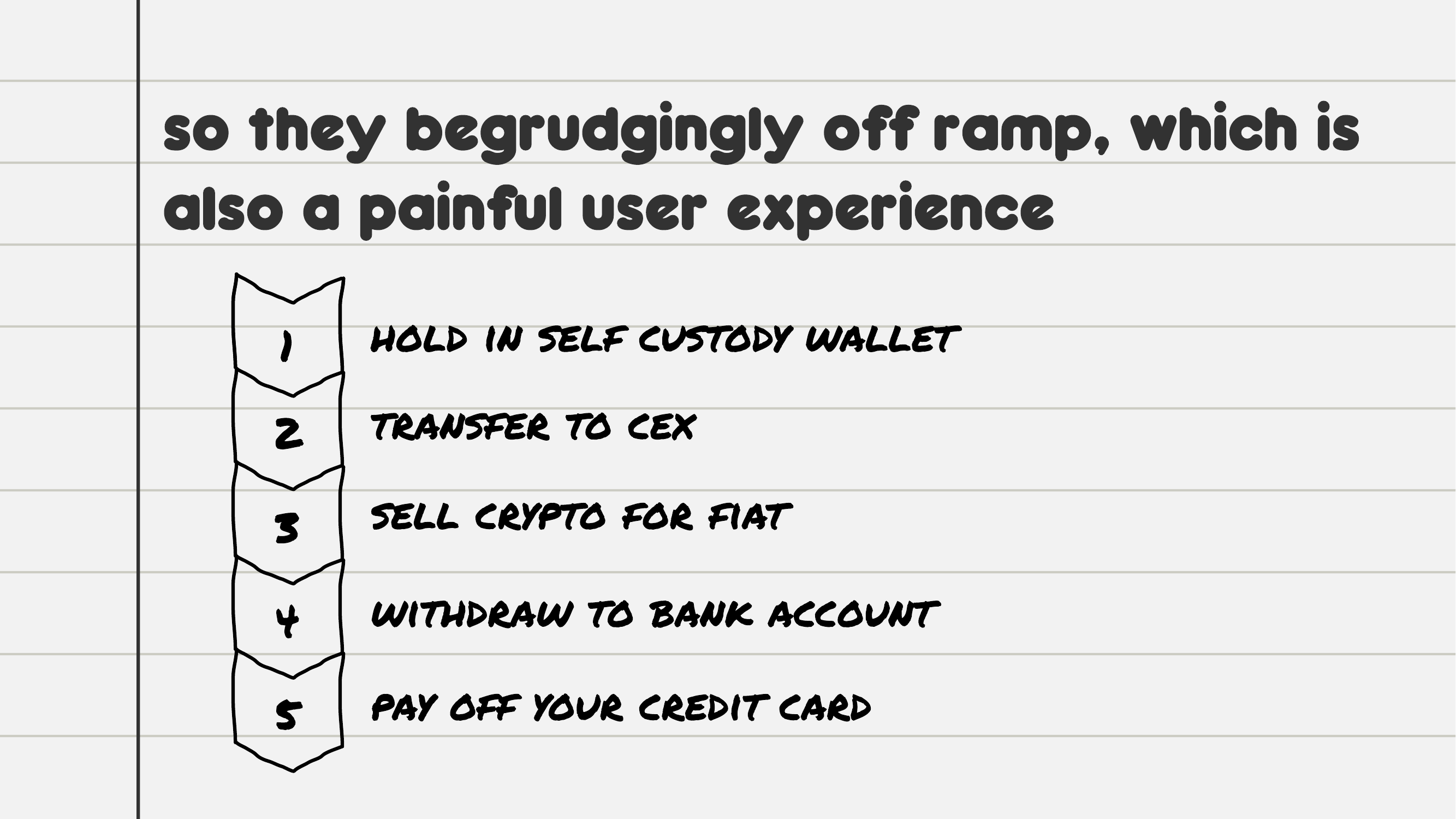
Traditional financial services don't recognise crypto as collateral, so mortgages, credit lines, personal loans, and auto financing all refuse to underwrite on onchain funds. That means crypto holders who need to spend in the real world are forced through a painful off-ramp flow where they transfer from self-custody to a centralised exchange, sell crypto for fiat, withdraw to a bank account, and then pay off a traditional credit card. Every step adds friction, triggers a taxable event, and means lost exposure to the assets they actually want to hold.
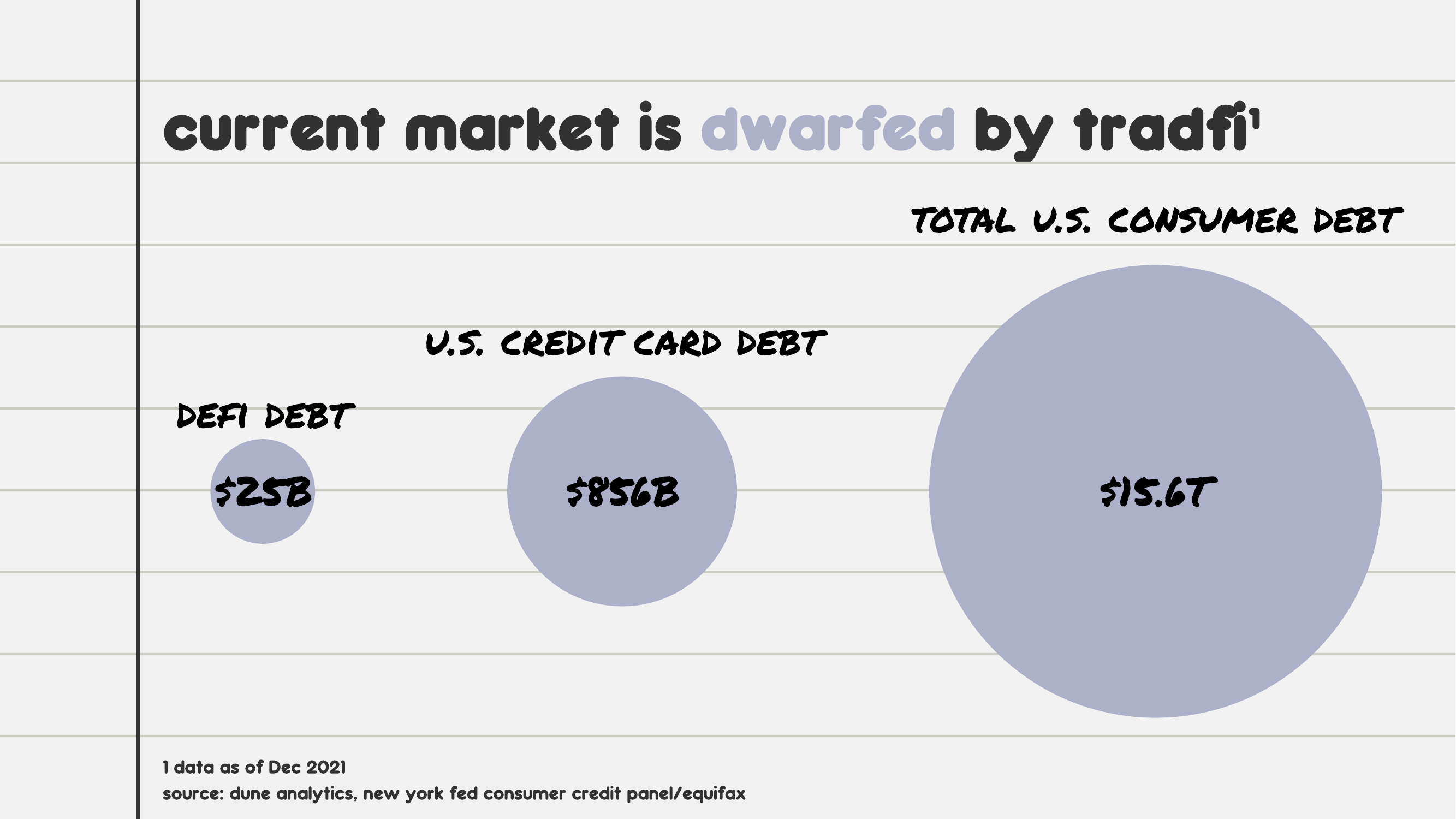
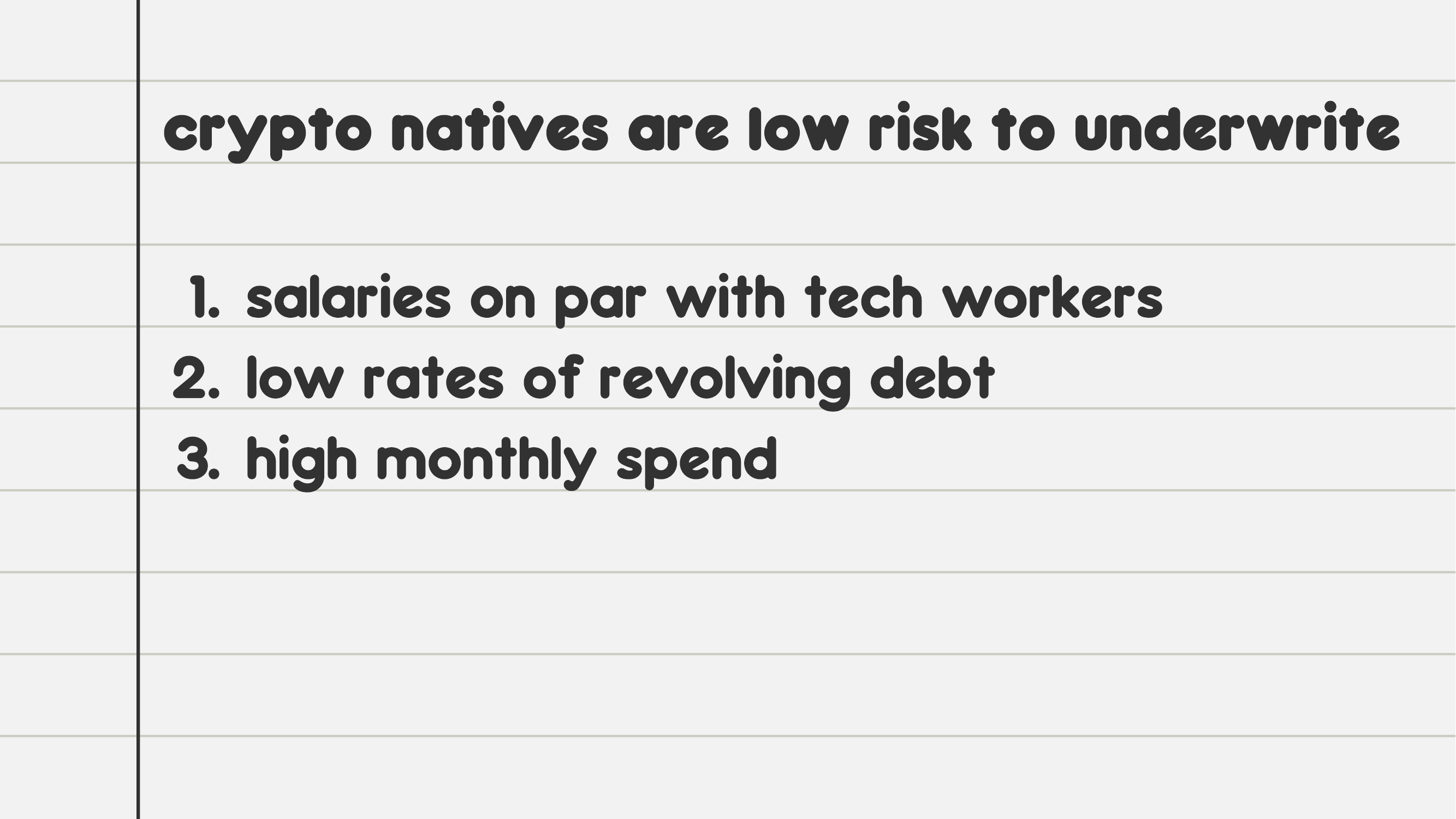
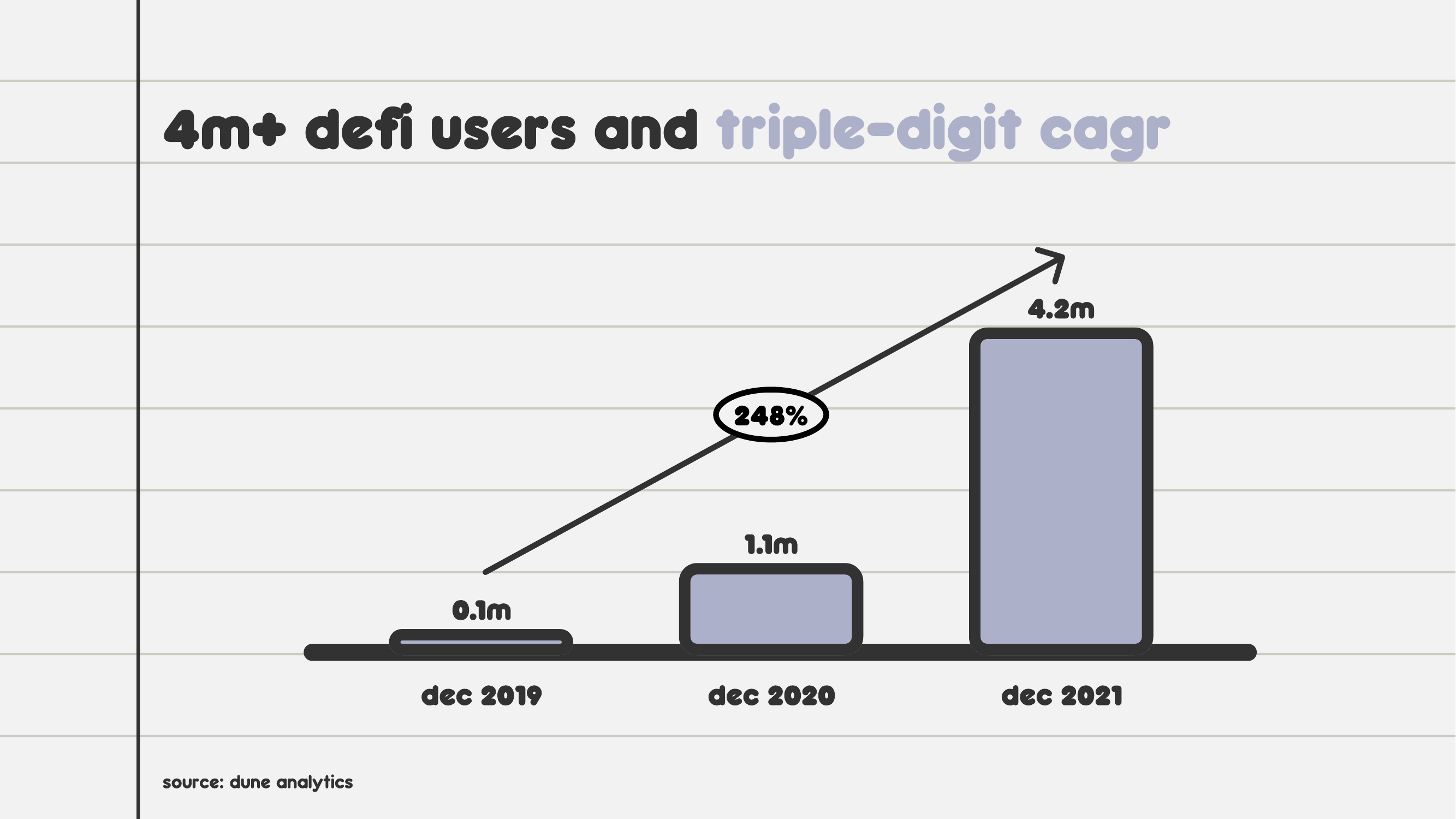
The size of the gap was hard to ignore. DeFi had $25B in total debt at the time while US credit card debt sat at $856B and total US consumer debt was $15.6T. DeFi users were growing at 248% CAGR (from 0.1M in Dec 2019 to 4.2M in Dec 2021), and crypto natives were actually low risk to underwrite because they had salaries on par with tech workers, low rates of revolving debt, and high monthly spend.
Product
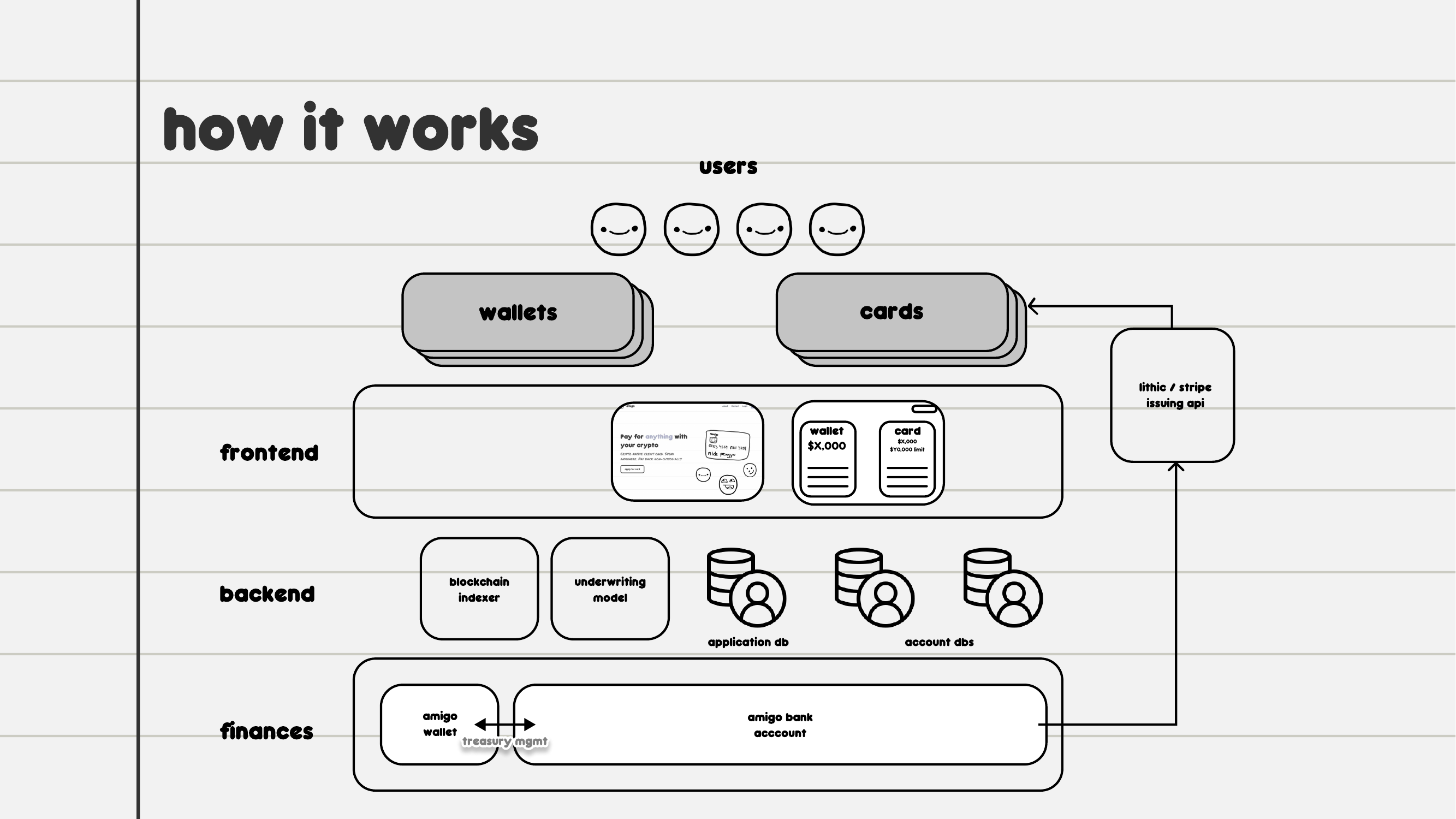
The core product was a Visa/Mastercard credit card underwritten on the user's connected crypto wallet balance. Users spend with the card anywhere and pay their statement directly in crypto from their own wallet, which was a big differentiator from existing cards that required funds to be held in a custodial platform like Gemini.
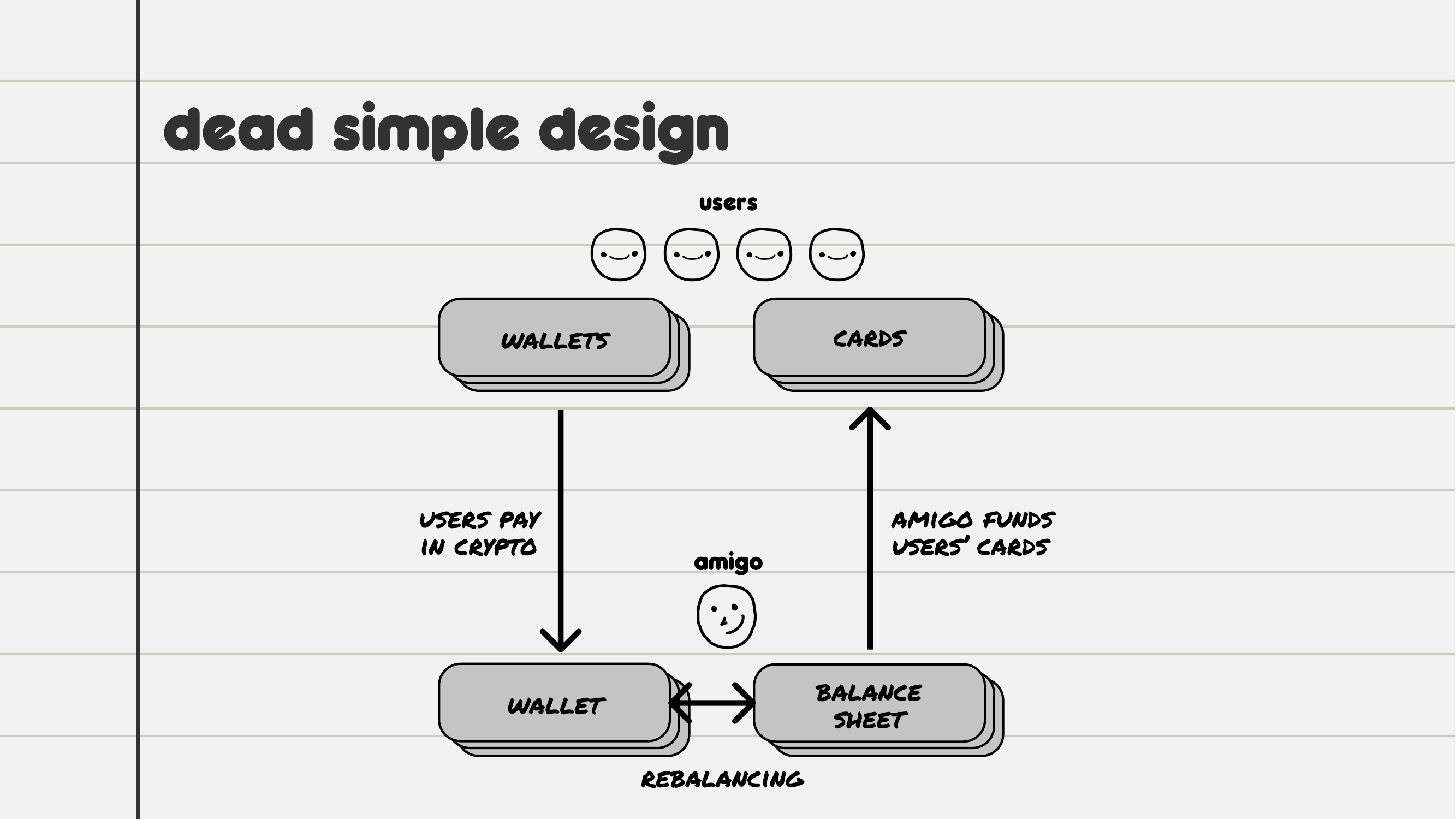
Users would connect their wallets and receive cards issued through Lithic. Amigo funds the cards from our balance sheet and users repay in crypto. On the backend, a blockchain indexer monitors wallet balances for underwriting while the balance sheet rebalances between the Amigo wallet and the bank account that funds card transactions.
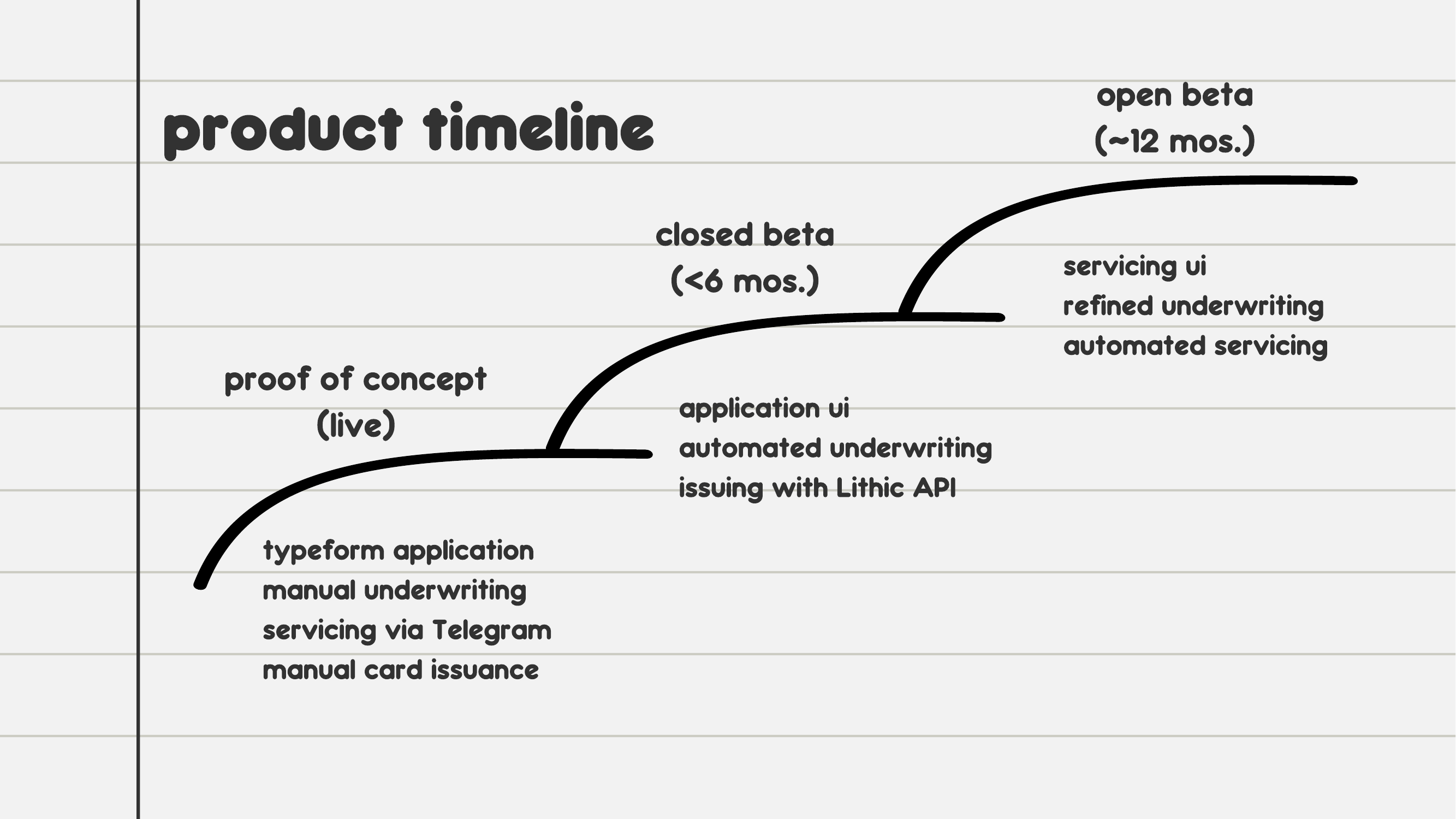
I planned the rollout in three phases. The first was a live proof of concept with Typeform applications, manual underwriting, and Telegram-based servicing. Within six months we would move to a closed beta with an application UI, automated underwriting, and Lithic API issuing. By twelve months we would be in open beta with a full servicing UI, refined underwriting, and automated servicing.
Roadmap
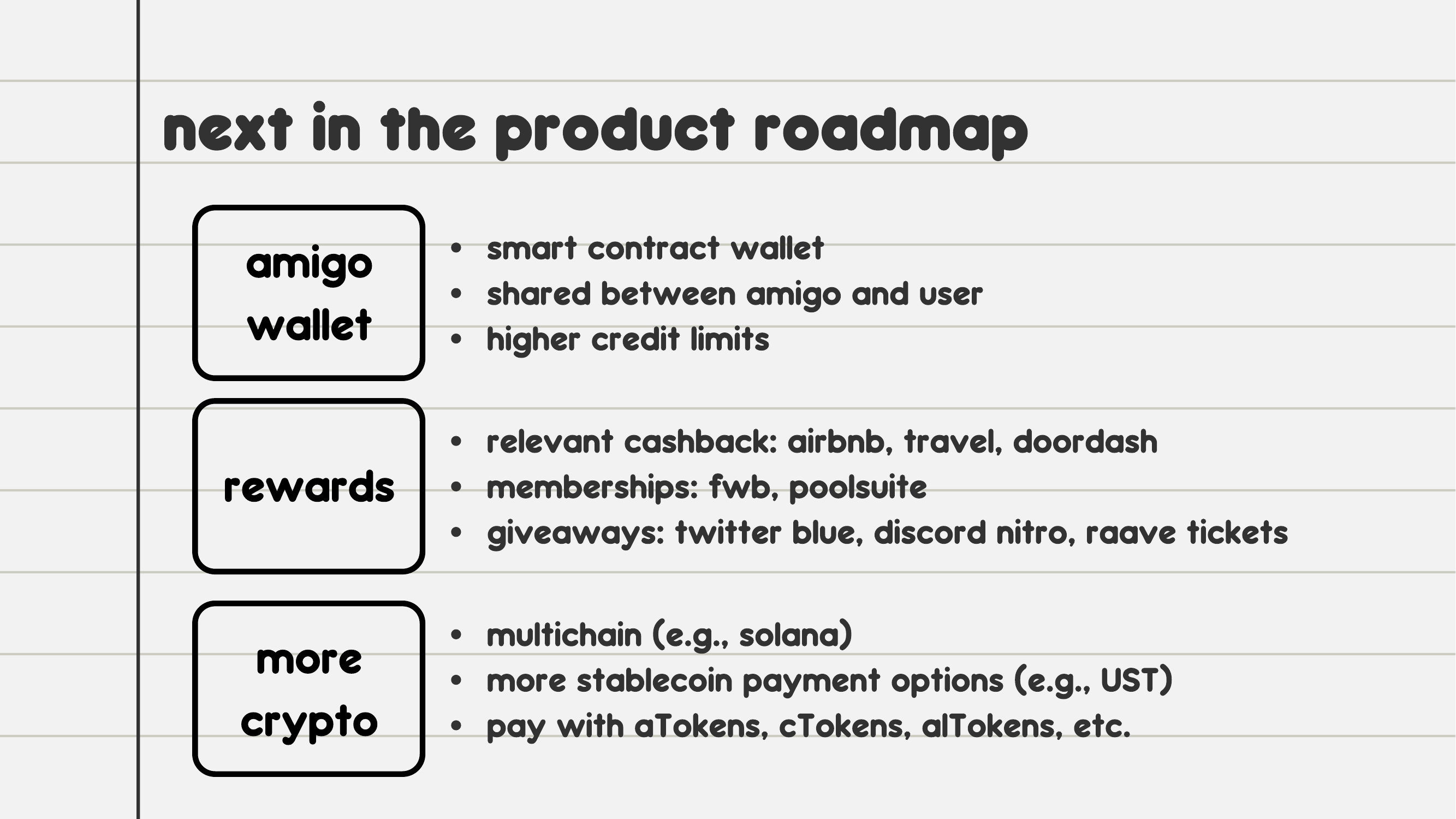
Beyond the credit card, we planned to expand into a few directions.
- Amigo Wallet would be a smart contract wallet shared between Amigo and the user, enabling higher credit limits
- Rewards would include cashback on categories like Airbnb, wellness like Equinox and Oura Ring, and DoorDash, plus memberships (FWB, Poolsuite) and giveaways (Twitter Blue, Discord Nitro, Raave tickets)
- Multichain and more crypto would bring Solana support, more stablecoin payment options, and the ability to pay with yield-bearing tokens like aTokens and cTokens
Brand and Design
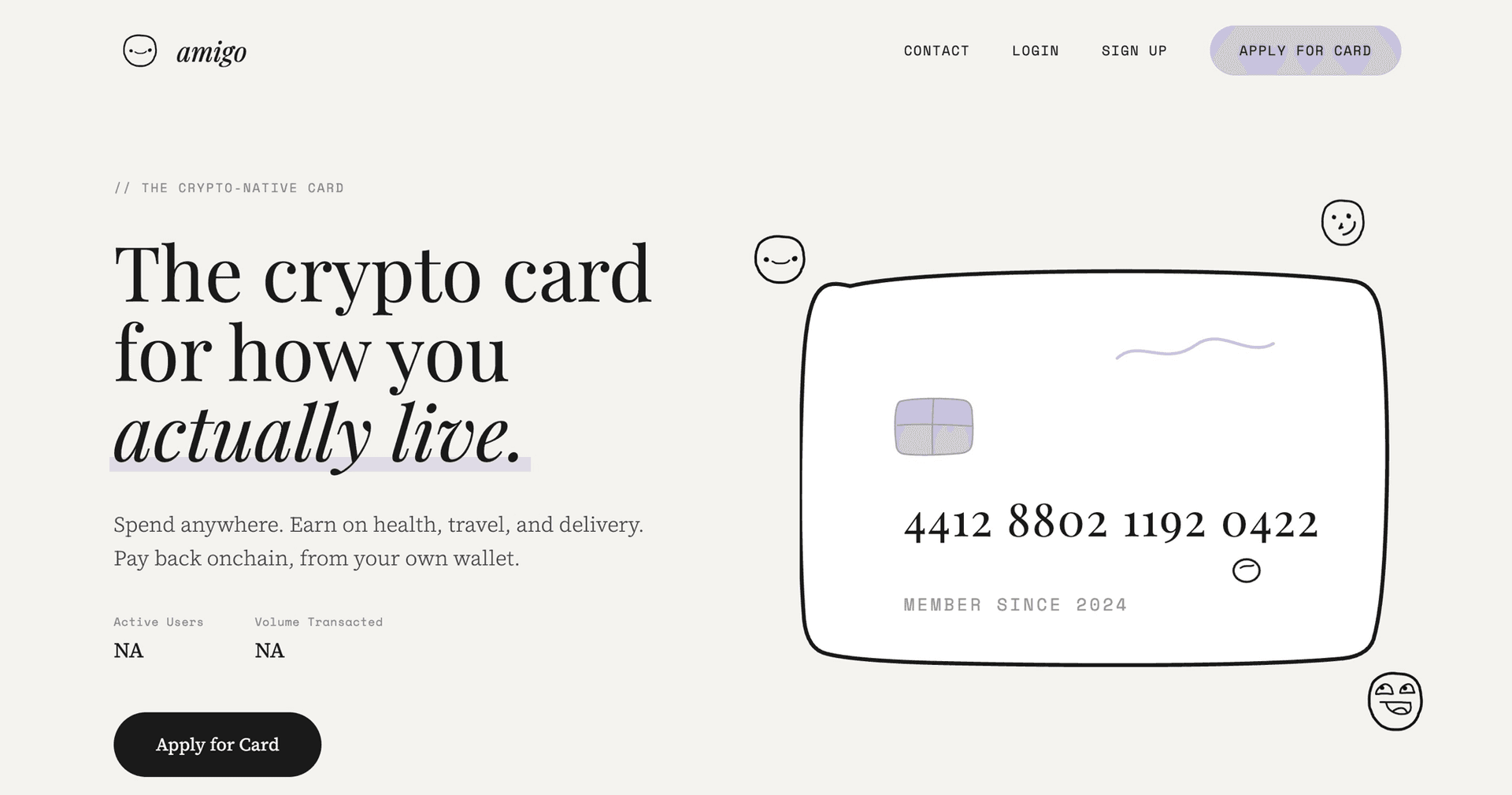
I wanted Amigo to feel approachable and distinctive, matching the playful energy of crypto natives. The brand used a hand-drawn notebook aesthetic with a smiley mascot, Franxurter typeface for headlines, and a warm cream and lavender palette. The pitch deck followed the same visual language with composition book texture, hand-drawn diagrams, and a tone that felt more like a friend explaining the product than a corporate pitch.
I also designed and built the marketing site and product dashboard with Next.js, React, TypeScript, and Firebase, using CSS Modules for the custom brand work.
Reflections
Crypto credit cards are now a real category with companies like Rain are doing exactly what we set out to build. We had 300+ waitlist signups and strong advisor from in consumer banking, so the market validation was there.
But we walked away because neither of us felt strongly enough about the credit card problem space to sustain a multi-year commitment as founders. That ended up being the right call because I went on to co-found Catalyst, which was a problem I was deeply invested in and which ultimately led to a successful acquisition.
The thing I took away from Amigo is that founder-market fit goes beyond skills and opportunity. Building a company requires a level of conviction that goes beyond just seeing an opening. You have to actually want to live in the problem space for years.